
Bisman’s Story: From Daily Challenges to Digital Solutions
“What started as something I simply had to manage became something that shaped my perspective. It taught me resilience, but more importantly, it taught me to pay attention to the experiences of other people facing challenges that may not always be visible.”
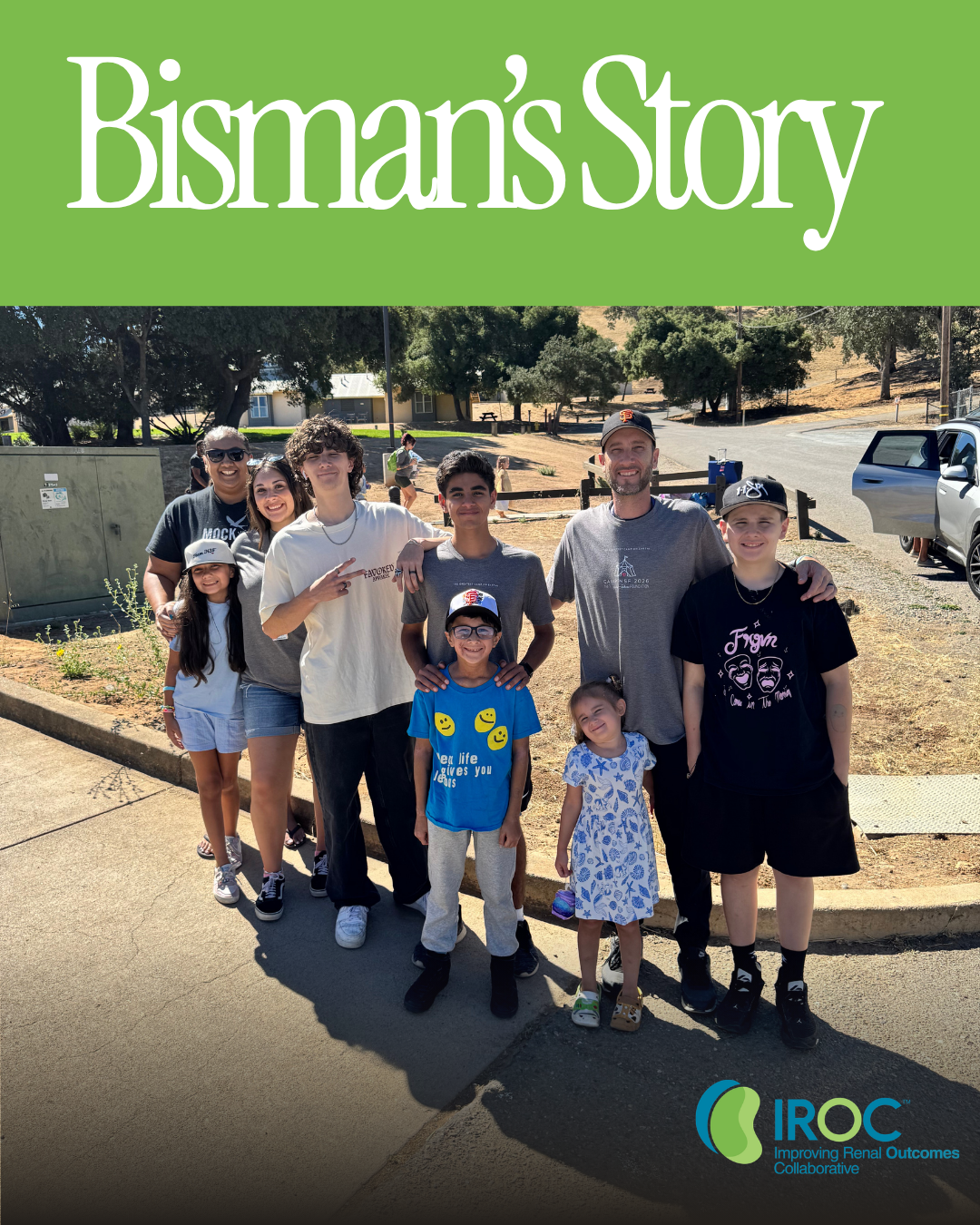
Born in India and diagnosed with nephrotic syndrome at age two, Bisman Chabda grew up learning to navigate a condition that affected far more than just his health.
As a young child, he experienced many physical challenges that came with nephrotic syndrome, including significant swelling and exhaustion. Treatment brought its own challenges and changes, including the loss of his eyebrows as a side effect. Medications and dietary restrictions became part of everyday life.
For Bisman, these experiences shaped what it meant to grow up with Nephrotic Syndrome. There were the obvious challenges of managing his condition, but there were also the smaller, everyday decisions that other children and teenagers didn't necessarily have to think about. Especially when it comes to food choices, as Nephrotic syndrome requires diet modification to control the symptoms.
He knew what it was like to stand in a grocery store reading a food label and wondering whether something fit within his dietary restrictions. He knew what it felt like to navigate eating with friends while keeping his health in mind. And he knew that living with kidney disease could sometimes mean feeling different from the people around him.
When Bisman was seven, his family moved from India to the United States. Years later, at age 17, he attended the Nephrotic Syndrome Foundation’s camp in Livermore, California. Camp gave Bisman something he hadn't experienced in quite the same way before: the opportunity to meet other young people and families living with Nephrotic Syndrome and hear their stories.
Those conversations became an important turning point. He began to recognize that while families could share the same diagnosis, their experiences could look very different. Their symptoms, treatments, lifestyles, priorities, and challenges were not necessarily the same.
“Those conversations made me realize that AYURA had to be built around the individual, rather than treating every patient with the same diagnosis as having the same needs,” said Bisman.
That realization became the starting point for AYURA. Bisman began thinking about what it could look like to use technology to bridge the gap between the complex health and dietary information patients receive from their care teams and the everyday decisions they have to make.
“I started asking what could happen if technology could take complex health and dietary information and turn it into practical guidance that a young person could actually understand and use.”
That question became the foundation for AYURA, a technology designed to help translate personalized health and dietary information into practical guidance for young people living with kidney disease. Personalization is at the heart of the idea. Rather than assuming that everyone living with kidney disease has the same needs, AYURA is designed around the individual.
Bisman sees the technology as something that can work alongside healthcare professionals, helping young patients better understand their options and identify questions they can bring to their care team. Throughout this journey, Bisman has also had the support of his nephrologist, Dr. Paul Brakeman, a nephrologist at UCSF who has cared for him for more than eight years. Dr. Brakeman has been a consistent presence throughout Bisman’s medical journey, caring for him as he grew from a young child living with nephrotic syndrome into a teenager who is now using his experiences to advocate for others and develop new solutions within the kidney community. Their relationship represents another important part of Bisman’s story: the long-term relationships that can develop between young people living with kidney disease and the healthcare professionals who care for them over many years.
As AYURA developed, Bisman and his teammate, Arhaan Khurana, had the opportunity to take their idea beyond the kidney community and into the 2026 MediMate Foundation Healthcare Innovation Hackathon. Together, Bisman and Arhaan worked to develop AYURA, bringing together Bisman’s lived experience with Nephrotic Syndrome and their shared interest in using technology to address a real healthcare challenge. They refined their idea, developed the concept, and presented AYURA alongside other young innovators working to solve problems in healthcare. Their work culminated in a major milestone: Bisman and Arhaan received 1st Prize for AYURA.
For IROC, Bisman’s achievement is especially meaningful because AYURA began with something so familiar to the families we serve: a young person experiencing a problem firsthand and asking how it could be made better. His story is also a reminder of the value of listening to young people living with kidney disease. Their experiences can reveal challenges that may not always be visible in a clinic or captured by a diagnosis. Bisman says his experience has changed the way he thinks about being a young advocate.
“At 17, I am building for young people while also being one of them. I understand the difference between something that sounds useful in theory and something a teenager would want to use.”
He hopes AYURA will ultimately give other young people living with kidney disease greater confidence and independence in navigating everyday decisions. But perhaps just as importantly, he hopes his story encourages other young people to recognize that their own experiences have value.
“The things that frustrate us, confuse us, or make everyday life harder can reveal problems that are worth solving.”
His advice to another young person with kidney disease who has an idea for making things better is simple: “Start with the problem you know best and then listen beyond your own experience.”
Bisman’s story began with something he had no choice but to manage growing up with nephrotic syndrome. Over time, that experience became something else—a perspective that helped him recognize challenges, listen to others, and imagine a different way forward.
At 17, Bisman is still living with nephrotic syndrome. He is also using what he has learned from that experience to build something that could help others. And his message to other young people goes beyond AYURA. It is about recognizing the value of your own story and trusting that your perspective can contribute to something meaningful.
“It’s not just about what you tell people. It’s about how you make them feel. I hope you keep believing in your story, trusting your perspective, and knowing you have something meaningful to give.”
Join Our Community
Every family's journey matters.
If Bisman’s story resonates with you, we invite you to join IROC Family Partners to connect with other families navigating pediatric kidney disease or share your own story to encourage others walking a similar path.